
 |
For patients with diabetes or chronic kidney disease, a small foot problem can become a serious limb threat with surprising speed.
A blister from a new shoe, a cracked heel, an ingrown toenail or a callus may initially look minor. But when sensation is reduced and blood flow is poor, the patient may not feel the injury, the wound may not heal and infection can spread before the seriousness of the problem is recognized.
The combination of neuropathy, pressure, infection and Peripheral Artery Disease is one of the most important reasons that daily foot care and rapid access to vascular evaluation matter.
September is PAD Awareness Month, but for high-risk patients, awareness must become a routine practiced every day.

“For a person with diabetes or kidney disease, a small blister can become a major limb threat quickly. Daily foot checks, rapid communication and coordinated vascular care are not optional extras; they are part of amputation prevention.” — Stephanie Sheridan, DNP, ANP-C, CNN-NP
Why Diabetes Can Hide PAD
PAD reduces the arterial blood supply to the legs and feet. The classic symptom is exertional leg discomfort that improves with rest, but diabetes can blur that signal.
Peripheral neuropathy may reduce pain sensation. Limited mobility may also prevent a patient from walking far enough to produce claudication. As a result, the first visible sign of PAD may be an ulcer, skin-color change or infection rather than leg pain.
Diabetes can affect healing in several ways. High glucose levels can impair immune function, and neuropathy can expose an area of the foot to repeated pressure or trauma without the patient recognizing it.
When PAD is present at the same time, the tissue may not receive enough oxygen and nutrients to repair the injury. Treating the wound surface without evaluating circulation can therefore leave the underlying reason for delayed healing unresolved. The American College of Cardiology’s 2025 scientific statement identifies patients with both PAD and diabetes as being at increased risk for cardiovascular events and adverse limb outcomes.
Why Kidney Disease Makes Testing and Treatment More Complex
Chronic kidney disease is an important PAD risk amplifier. Patients receiving dialysis are particularly vulnerable to arterial disease, vascular calcification, infection and poor wound healing.
THE SAGE GROUP reported that more than 3.5 million people with CLI have calcified lower-limb arteries and linked medial arterial calcification with aging, diabetes and chronic kidney disease.
Calcified arteries may become stiff and difficult to compress. That matters because the ankle-brachial index depends on compressing an ankle artery to measure its pressure.
In some patients with diabetes or kidney disease, an ABI can be falsely high or apparently normal even when clinically meaningful disease is present. The 2024 PAD guideline therefore recommends additional testing—such as toe pressures, toe-brachial index, waveforms, transcutaneous oxygen pressure or skin-perfusion pressure—when chronic limb-threatening ischemia is suspected.
The Daily Foot Check
Patients with diabetes, kidney disease or known PAD should inspect both feet every day.
Use a mirror or ask a family member to help examine the soles and areas between the toes. Look for:
- Blisters
- Cuts or cracks
- Drainage
- Redness or swelling
- Skin-color changes
- Calluses
- Nail injuries
- Warm or cold areas
- Open sores
- Dark or black tissue
Shoes should be checked for stones, rough seams or other objects before they are put on. Feet should be washed gently in warm—not hot—water and dried carefully. Dry skin may be moisturized, but lotion should generally not be placed between the toes. Patients should avoid walking barefoot and should not attempt to cut corns or calluses themselves.
Professional nail and callus care may be needed, particularly when sensation or circulation is impaired.
These preventive steps are important, but they do not replace medical evaluation.
When a Foot Problem Requires Immediate Attention
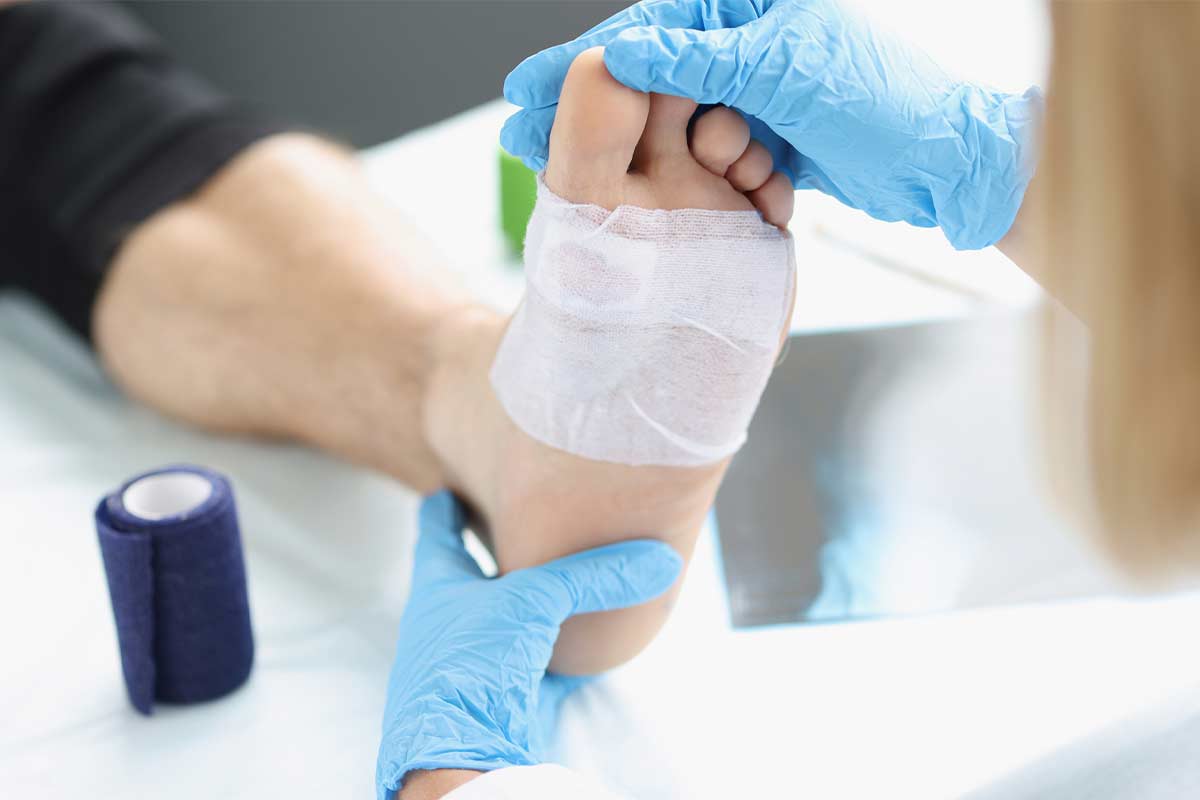
A wound that is worsening, draining, darkening or not clearly improving needs medical attention.
Fever, spreading redness, foul drainage, rapidly increasing pain or black tissue can indicate serious infection or tissue loss. Patients experiencing these changes may require emergency evaluation.
Even without fever or severe pain, a wound that remains open for more than two weeks can be a sign of chronic limb-threatening ischemia when PAD is present. Neuropathy may prevent the patient from feeling how serious the condition has become.
When to Involve a Vascular Specialist
A vascular referral should be considered when a patient has:
- A foot ulcer lasting longer than two weeks
- Ischemic rest pain
- Gangrene or tissue loss
- Abnormal or absent pulses
- Leg pain with walking
- Unexplained skin-color or temperature changes
- Objective evidence of poor perfusion
- Diabetes with a non-healing wound
- Kidney disease with new foot symptoms
The Global Vascular Guidelines recommend urgent referral for suspected CLTI. Early involvement is important because wound care, antibiotics and pressure relief cannot substitute for blood flow when ischemia is preventing healing.
The vascular evaluation includes more than deciding whether a procedure is needed. It identifies the location and severity of disease, estimates the wound’s ability to heal and helps the care team determine the safest sequence of treatment.
Some patients can be managed with medical therapy, risk-factor treatment and close observation. Others may need endovascular intervention, bypass surgery or a combination of treatments to improve perfusion.
Infection control, wound debridement and pressure relief must be coordinated with the vascular plan.

Why a Multidisciplinary Team Changes Care
The 2024 PAD guideline states that care for patients with PAD—and especially those with CLTI—is optimized through a multispecialty team. The Amputation Prevention Symposium is built around the same principle, bringing together vascular specialists, podiatry, wound care, nursing, imaging and other disciplines.
No single clinician can solve every part of a complex diabetic foot problem.
Nurse practitioners frequently connect those moving pieces. We review medications and risk factors, examine wounds, recognize changes in perfusion, reinforce foot-care habits, coordinate diagnostic testing and communicate with:
- Vascular surgeons
- Podiatrists
- Wound-care clinicians
- Primary care providers
- Nephrologists
- Endocrinology teams
- Dialysis professionals
- Patients and caregivers
That continuity is particularly important after revascularization. Restoring blood flow is a major step, but wound healing, risk-factor control and vascular surveillance continue long after the procedure.
Why VIC’s Critical Limb Center Matters
Vascular Institute of Chattanooga identifies itself as the region’s only Critical Limb Center and was founded as a Regional Amputation Prevention Center.
The practice combines board-certified vascular surgeons, advanced practice providers with limb-preservation and dialysis expertise, nationally accredited vascular testing, open and minimally invasive treatment options, wound-focused care planning and rapid access for urgent vascular concerns.
The message for patients and families is practical:
Check the feet. Report changes quickly. Do not assume numbness means the foot is safe, and do not assume a painless wound is a minor wound.
For referring clinicians, check pulses, ask about walking function and involve vascular specialists early when healing is delayed.
Small actions taken early can prevent a small injury from becoming a life-changing loss.
About the Author
Stephanie Sheridan, DNP, ANP-C, CNN-NP, is a Doctor of Nursing Practice and nurse practitioner at VIC with advanced expertise in dialysis access, limb preservation and complex vascular patients. VIC identifies Dr. Sheridan as nationally recognized for her work in amputation prevention and comprehensive foot-care models.