

 |
Treats DVT with Precision and Compassion
Deep Vein Thrombosis (DVT) is a serious and potentially life-threatening condition that occurs when a blood clot forms in a deep vein, most commonly in the legs. Left untreated, DVT can lead to severe complications such as pulmonary embolism, chronic leg swelling, and post-thrombotic syndrome. At the Vascular Institute of Chattanooga (VIC), we take a proactive and advanced approach to diagnosing and treating DVT, using cutting-edge technology and minimally invasive techniques to restore blood flow and reduce long-term risks.
If you or someone you know has been diagnosed with or is at risk for DVT, understanding how VIC’s specialized team handles this vascular emergency can make all the difference in outcomes and peace of mind.

What Is Deep Vein Thrombosis (DVT)?
DVT occurs when a blood clot (also called a thrombus) forms in the deep veins, typically in the lower leg, thigh, or pelvis. These clots block blood flow and can lead to swelling, pain, and redness. The greatest danger arises when a piece of the clot breaks loose and travels to the lungs, causing a pulmonary embolism (PE)—a potentially fatal complication.
DVT is often caused by a combination of slowed blood flow, damage to blood vessel walls, and increased clotting tendencies, which may stem from surgery, trauma, immobility, or inherited clotting disorders.
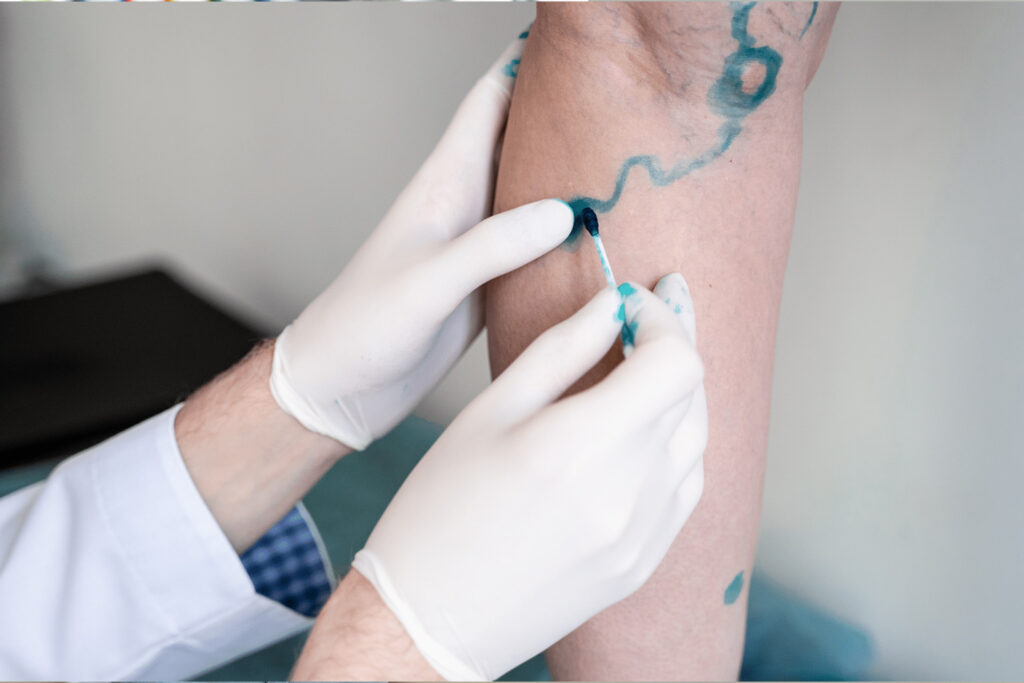
Common Symptoms of DVT
While some patients may not have any symptoms, others experience:
- Swelling in one leg (or arm, in rare cases)
- Cramping or pain in the affected limb
- Red or discolored skin
- Warmth over the vein
- Heaviness or tightness in the limb
Any of these symptoms—especially after surgery, long travel, or during pregnancy—should prompt immediate medical attention.